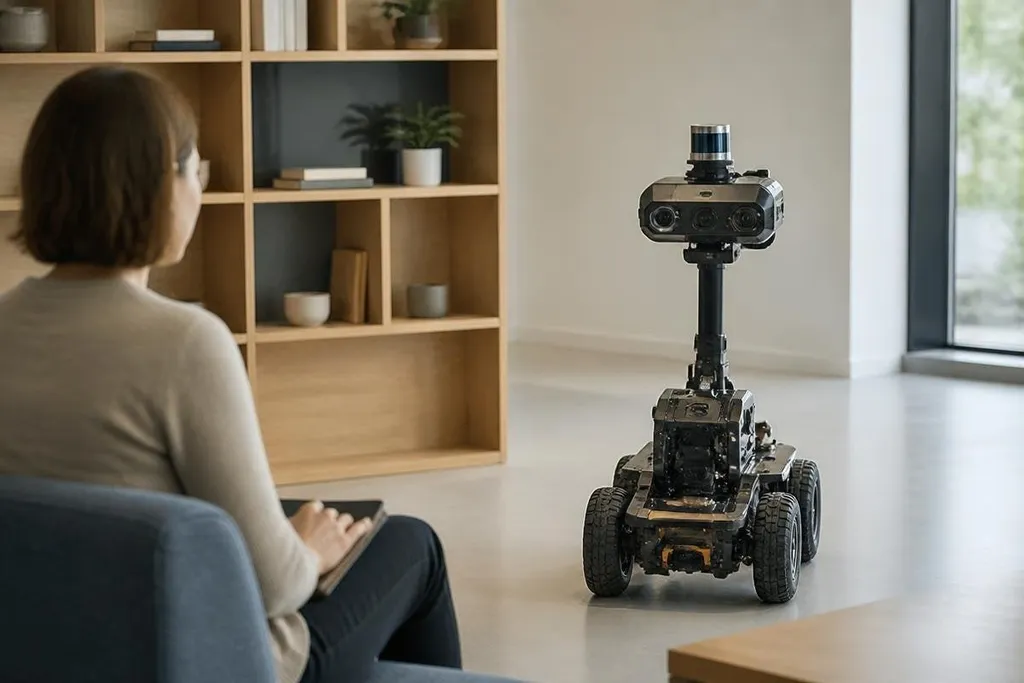
A robot can enter a room, speak to a person, record a view, or move an object without making its nature clear. That gap matters because people make different choices when they know a machine is present.
- People should know when a machine is speaking or recording.
- A robot’s operator should be easy to identify.
- The rule should focus on clear notice, not a warning on every moving part.
The first signal matters
A robot doesn’t need a human face or a voice that sounds natural. It does need to make three facts clear: it’s a machine, someone controls it, and its sensors or tools may affect the person nearby.
That notice can come from speech, a visible light, a screen, a label, or a sound. The method should match the setting. A delivery robot on a pavement needs a visible sign. A service robot speaking with a customer needs a clear spoken message.
The point is timing. A person should receive the notice before the robot records, asks for information, enters a private area, or starts a task near them. A label placed on the rear of a machine fails if the front reaches the person first.
What the rule should require
A useful rule would cover behavior rather than appearance. It would ask the robot or its operator to state:
- That the person is dealing with a robot.
- What the robot is doing in that moment.
- If it is recording sound, images, or other sensor data.
- Who operates the system.
- How the person can ask for help or report a problem.
These points give people enough information to respond. They also leave room for different designs, from warehouse vehicles to public information kiosks.
The operator matters as much as the robot. A machine that says “I’m a robot” still leaves a person without a clear route for questions or complaints. A company name, service number, or visible operator ID gives the notice somewhere to go.
Where identification helps most
The need is strongest when a robot can affect a person who did not choose to interact with it. That includes public spaces, care settings, workplaces, shops, and homes shared by several people.
A robot in a factory may need a different notice from a robot in a care home. Factory staff may already know the system and its work area. A visitor entering the same space may not. The rule should account for that difference without removing the basic notice.
A notice that says only “robot” leaves a visitor guessing about cameras and movement. Robot identification reporting can add named examples from machines that leave test sites and enter shared spaces. The notice should also give people a clear contact point before the robot listens or moves.
Identification also supports human control. If a person knows which machine is listening, moving, or making a request, they can decide what to say, where to stand, and whom to contact.
Where the rule can fail
A notice can become useless if every machine makes the same sound or displays the same small icon. People will stop checking it. The signal must be easy to see or hear, and it should remain available during the robot’s task.
A robot should also repeat the notice after a meaningful change. If it begins recording after a conversation starts, the person needs a new signal. If a remote operator takes control, that change should be clear too.
There is a limit to what identification can fix. A visible label won’t explain poor data handling, unsafe movement, or a decision made by an operator. Those issues need separate rules for safety, privacy, and responsibility.
I’d support a requirement for clear robot identification, with stronger notice when the machine records people or acts near them.
A practical rule for robot makers
Before putting a robot in a shared space, check these points:
- Notice comes first: the person sees or hears it before the robot acts.
- Purpose stays clear: the robot states what it is doing now.
- Sensors are named: recording starts only after a clear signal.
- The operator is reachable: a company or service contact appears on the robot or its screen.
- Changes trigger notice: remote control, new recording, or a new task gets a fresh signal.
- The signal fits the setting: lights, words, labels, and sounds work for the people nearby.
The useful standard is easy to state: no person should have to guess if a machine is present, what it is doing, or who answers for it. As robots enter more shared spaces, that notice should be part of the first design review, not the last sticker on the body.